
News Details
NEWS
Contact us
How Buyers Can Plan a Smart Pet Feeding Product Line
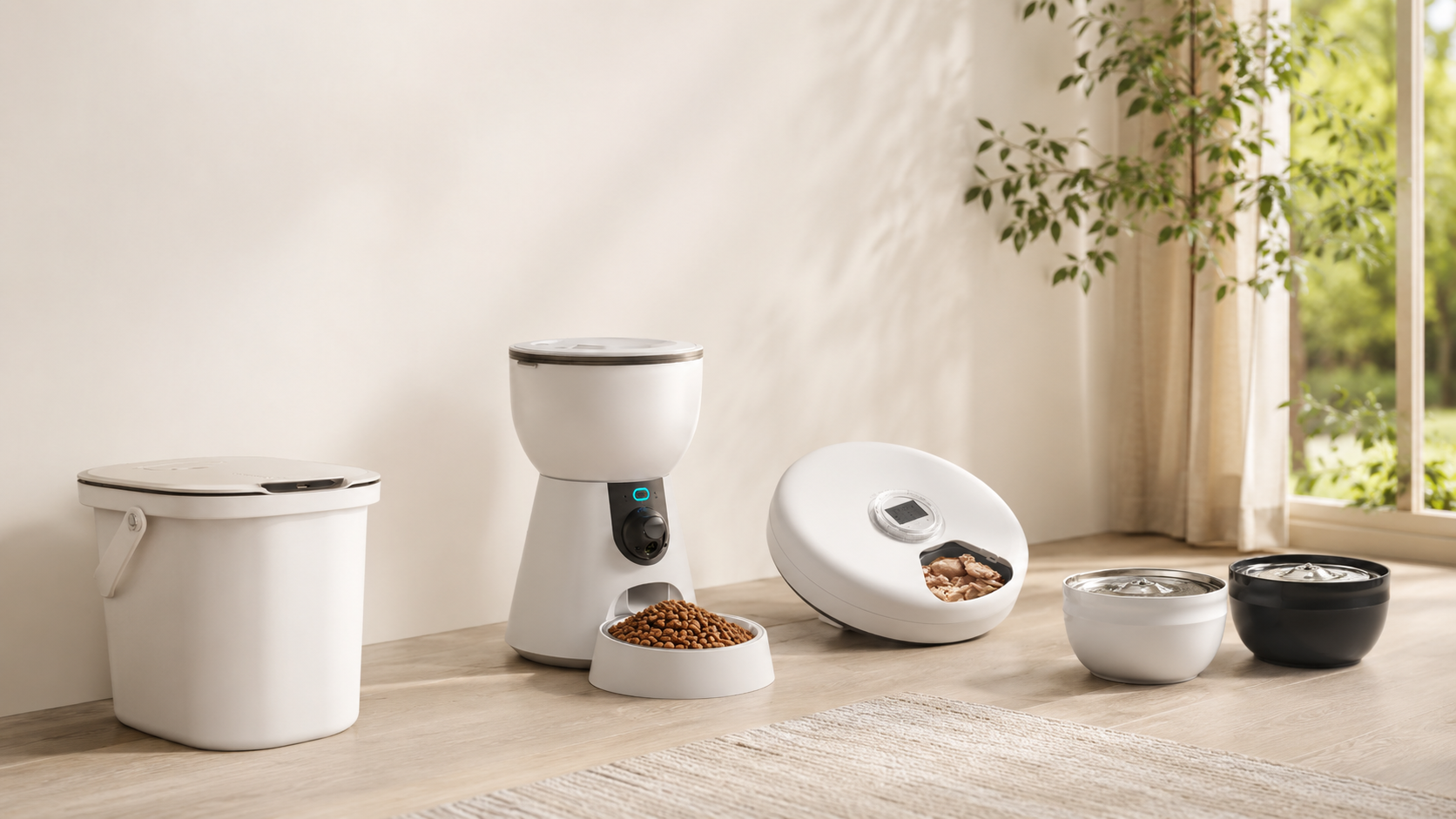
Open any smart pet appliance catalog and you can find several feeders within minutes. The harder task is deciding why each one deserves a place in the range.
Two feeders may differ in capacity, camera resolution or app functions. If they solve the same owner problem, the buyer still has to carry two sets of packaging, inventory and sales explanations.
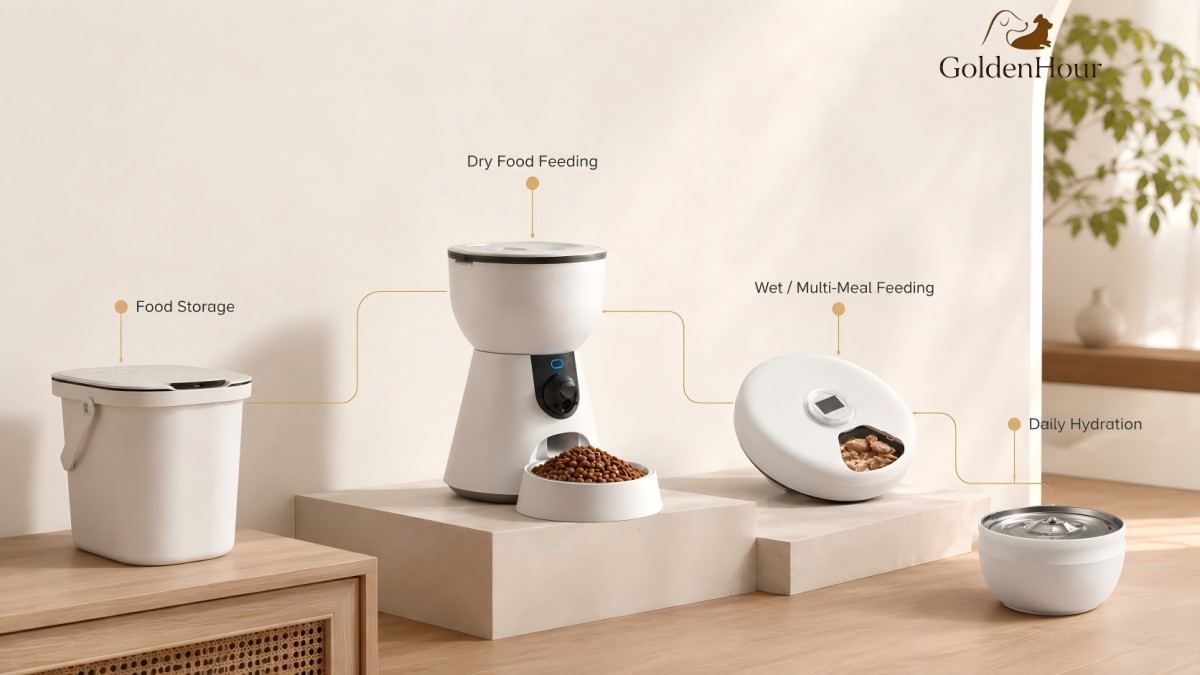
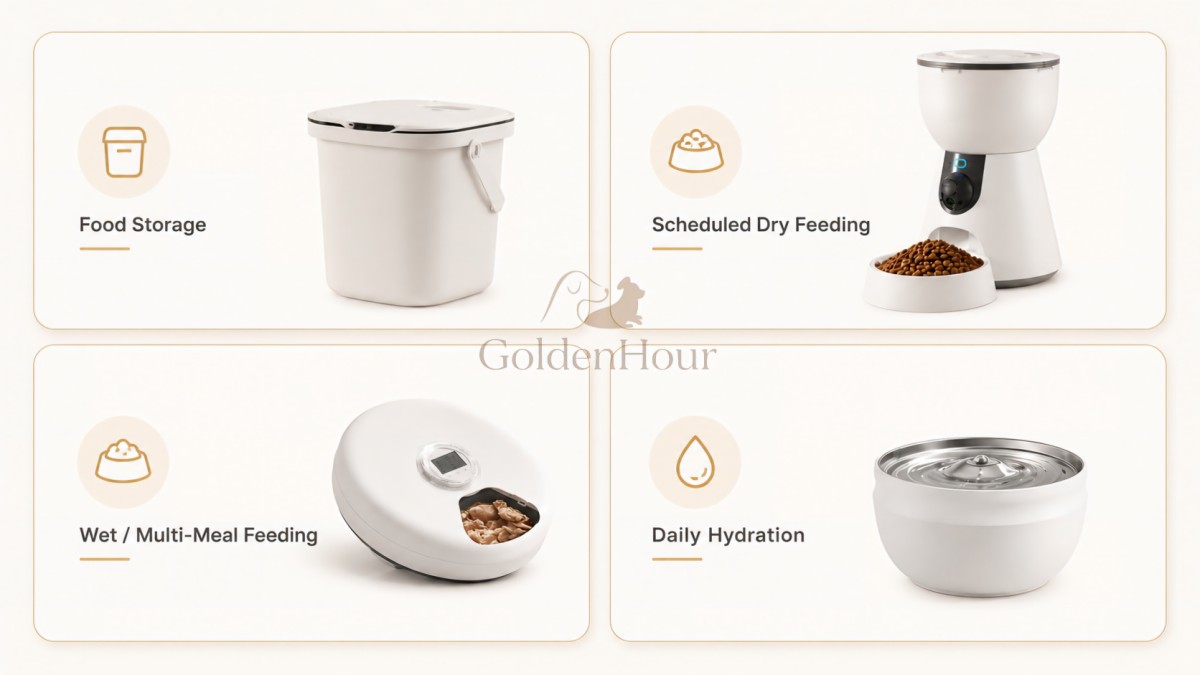
For a first collection, every SKU needs a clear job. Food storage, scheduled dry feeding, wet or multi-meal feeding and hydration are four useful starting points.
The Planning Rule
Start with the routine. Add the technology after the product's role is clear.
Four products with distinct jobs are easier to explain than eight feeders separated by small feature differences. This also gives buyers a cleaner basis for sampling, pricing and launch decisions.
What Belongs in a Smart Pet Feeding Product Line?
Food Storage Comes Before Feeding
Before a feeder can dispense food, the owner has to store it. A sealed or vacuum-assisted container extends the category beyond the appliance on the floor and covers an earlier step in the same routine.
The GCC20 Vacuum-Sealed Pet Food Storage Container is one example of that role. Buyers still need to confirm capacity, lid operation, cleaning access, charging and compatibility with the food bags sold in their market.
Dry Food Feeding Is Usually the Anchor
Scheduled dry feeding is often the most familiar entry point for the category. A useful split is between models built for straightforward scheduling and models built for connected monitoring.
The GFQ11 Smart Dry Food Feeder can sit in this part of the range. Kibble compatibility, portion consistency, backup power and cleaning access matter before camera or app functions are added to the discussion.
Wet Food Needs Its Own Product Logic
Wet-food feeding has a different ownership pattern from dry-food dispensing. Meal separation, tray removal, cleaning and the method used to manage short-term freshness all change the product brief.
The GFQ14 Multi-Meal Feeder gives the collection a separate use case instead of another dry-feeder variation.
Hydration Brings Repeat-Purchase Questions
Water fountains bring their own support questions: pump access, operating sound, leakage, filter replacement and cleaning frequency. These details shape reviews and repeat purchases after the product leaves the shelf.
The GWQ31 Pet Water Fountain fills the hydration role in a four-part feeding collection.
Separate Product Roles Before Adding Features
Once the routines are clear, decide where each model sits in the range. Capacity alone rarely creates a convincing price ladder.
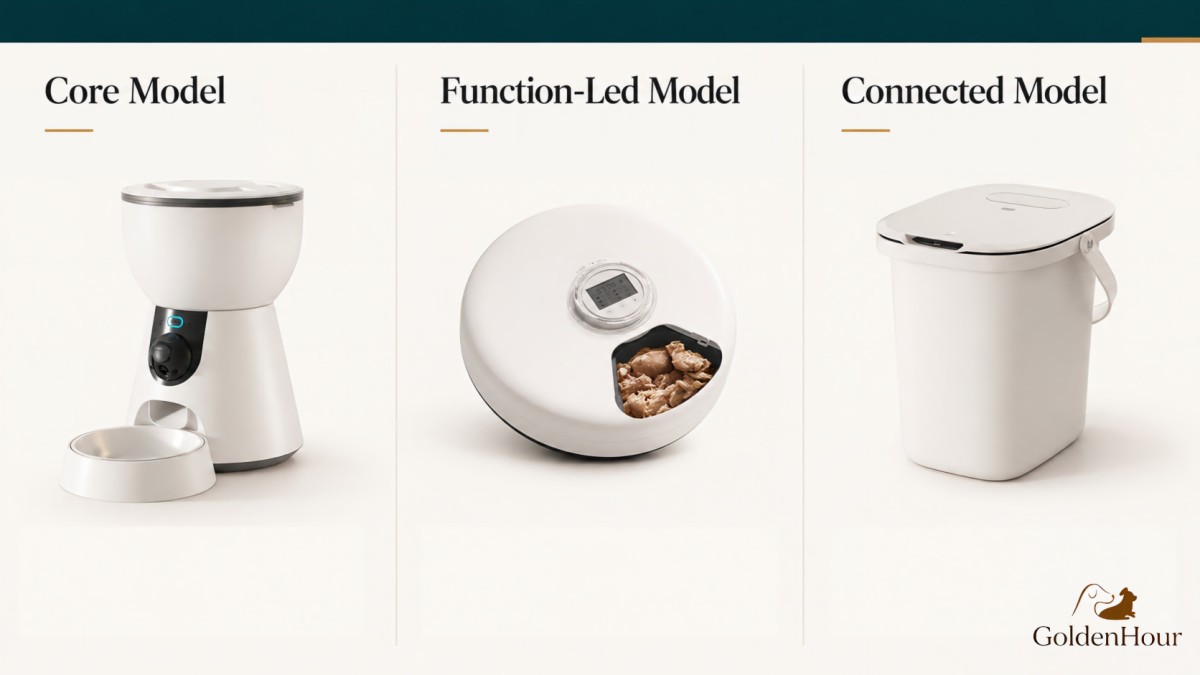
Core Model
The core model has to perform the daily job without creating setup or cleaning friction. Straightforward controls, dependable operation and a price that fits the channel matter more than a long specification sheet.
Function-Led Model
A function-led model earns its place by solving a narrower problem: wet meals, multi-pet feeding, backup power, improved filtration or food storage. The difference should be easy to explain in one sentence.
Connected Model
App control, cameras and alerts make sense when remote interaction is part of the intended use. Once an app is included, account setup, network requirements, offline behavior and technical support become part of the product, too.
Let the Sales Channel Decide What Matters
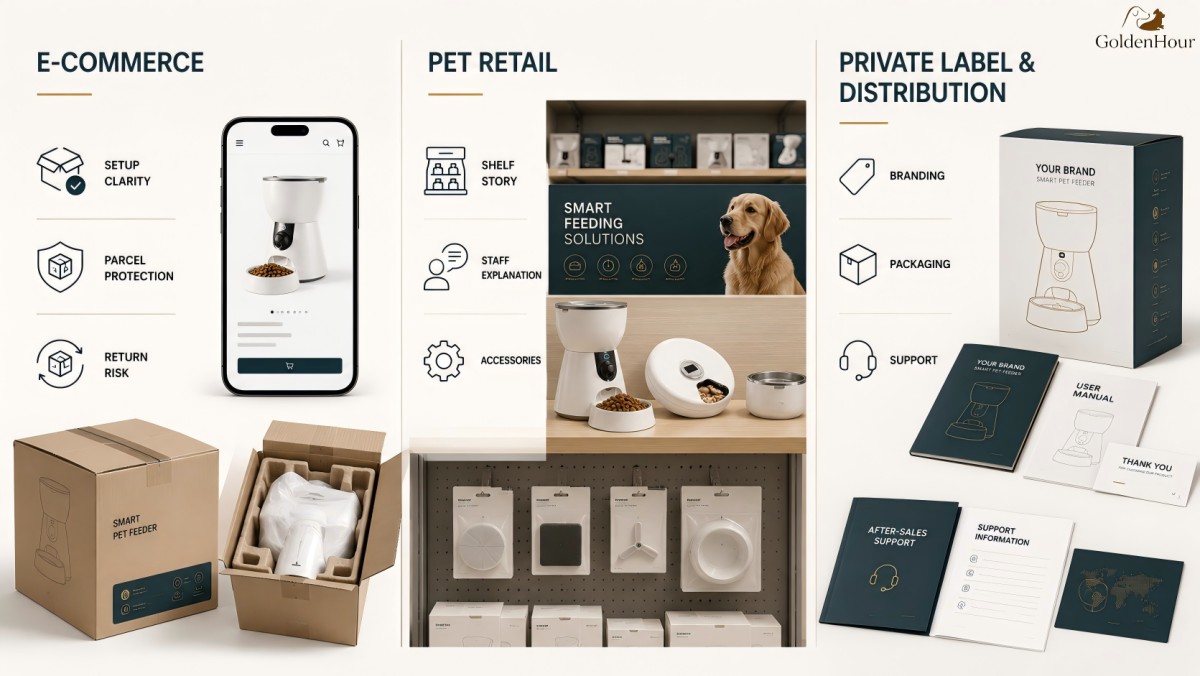
E-commerce
Online buyers have to understand the difference from photographs and a short product page. Setup clarity, parcel protection and the issues most likely to cause returns deserve early attention.
Pet Retail
A store range needs a clear shelf story. Staff should be able to explain why one model costs more, and replacement filters or accessories need an obvious place in the offer.
Private Label and Distribution
Private-label brands and distributors usually need more than a product sample. Before production planning begins, decide who is responsible for branding, packaging, manuals, spare parts, app support and destination-market requirements.
Test the Ownership Experience, Not Only the Sample
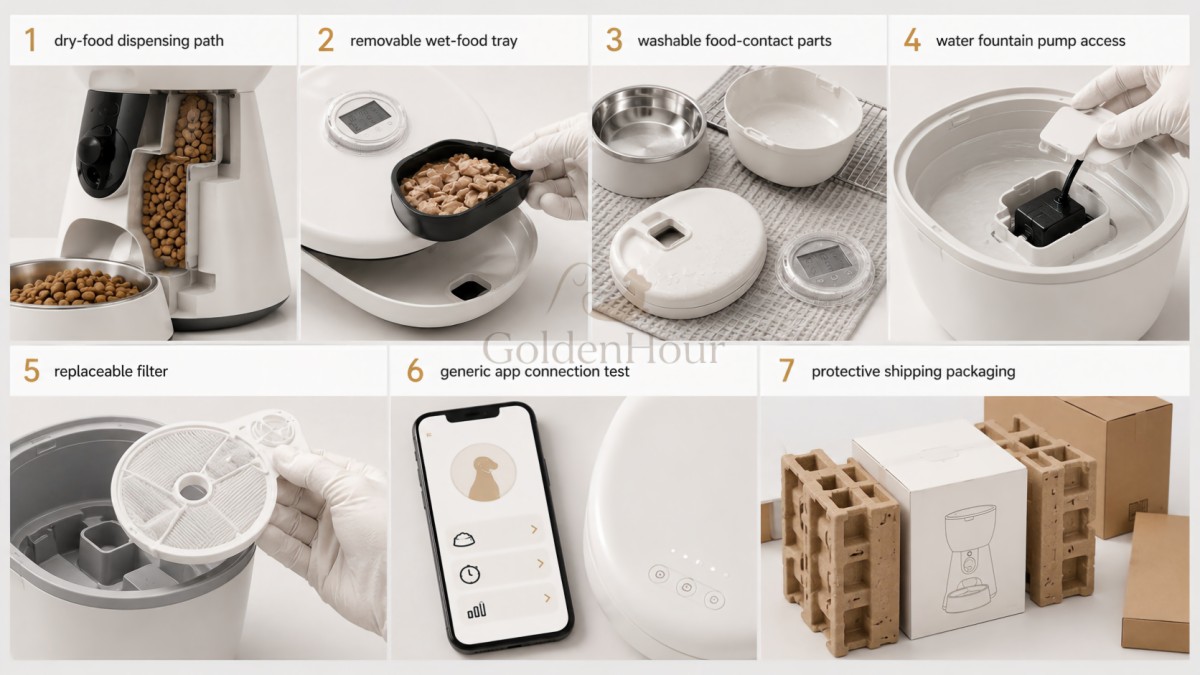
A sample can look good on a meeting-room table and still create support work after launch. Testing needs to follow the way the owner will fill, clean, connect and maintain the product.
Food Path and Dispensing
Confirm the intended food type, compatible kibble range, portion consistency, jam behavior and what happens after a power interruption. Wet-food models need a separate review of trays, sealing and cleaning.
Cleaning and Service Parts
Remove the parts an owner will actually wash. Check access to pumps, bowls, trays and food-contact surfaces. Decide which filters, pumps or accessories need to remain available after launch.
Connected Experience
Run the complete onboarding flow rather than checking only whether the app opens. Test account creation, network setup, alerts and the functions that remain available when the connection drops.
Destination Readiness
Confirm plug type, voltage, labels, instructions, required documentation and shipping protection for the destination during the sample stage.
What a Focused First Range Can Look Like
A first range can stay compact while covering the main feeding routine:
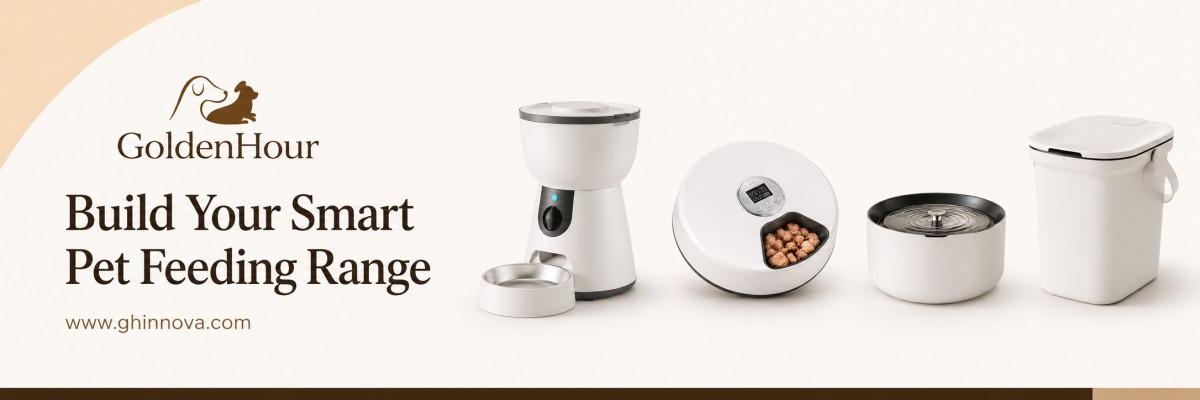
· GFQ11 as the scheduled dry-feeding anchor
· GFQ14 for wet food and separated meals
· GWQ31 for daily hydration
· GCC20 for food storage before feeding
Treat this as a planning example. The final bundle depends on the market, but the structure remains useful: four products with four different reasons to buy.
What to Send Before Asking for a Quote
A useful sourcing brief gives the supplier enough context to recommend models and samples. Include:
· Target country and sales channel
· Expected order quantity
· Target retail or purchase price
· Required feeding and connected functions
· Branding and packaging requirements
· Preferred launch timing
Add links or photographs of products close to the intended position. That gives both sides a concrete basis for discussing samples, options and trade-offs.
Explore GoldenHour Innova's Smart Feeding Solutions or contact the team with your target market, channel and product brief.
Frequently Asked Questions
What products belong in a smart pet feeding product line?
A focused line can cover food storage, scheduled dry feeding, wet or multi-meal feeding and hydration. Additional models should solve a clearly different owner or channel need.
How many SKUs should a new pet brand launch?
There is no fixed number. Three to five products with distinct roles are usually easier to test and explain than a larger group of similar feeders.
Which smart feeder features matter most?
Start with food compatibility, dispensing consistency, cleaning and backup operation. App control or a camera matters only when it supports the intended use and after-sales plan.
What is often overlooked when sourcing pet water fountains?
Pump access, cleaning, leakage, filter availability and replacement-part planning are often more important to repeat use than visual design alone.
What information is needed for an OEM or ODM inquiry?
Provide the destination market, sales channel, expected quantity, target price, required functions, branding needs, packaging requirements and launch timing.